
Russell Weaver · Models & math art
Models
How small choices draw big maps.
Each model runs in your browser, with nothing to install. Two come from Russell's own studies, two from classics of social science, and one is math art. Pick one, change a setting, and press play.
-
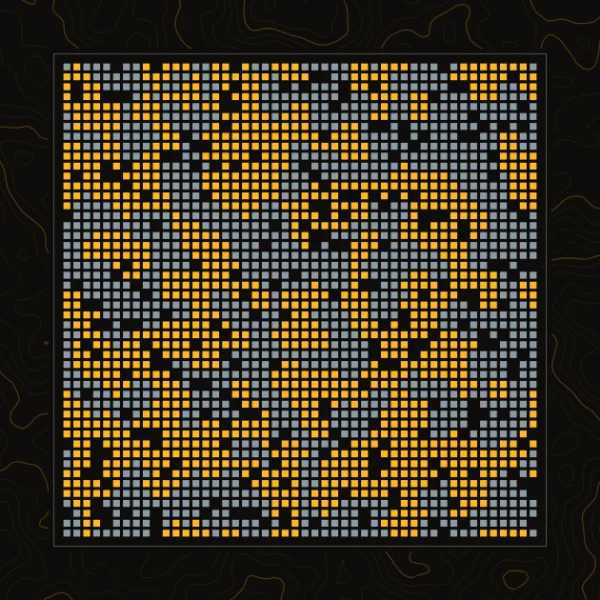 Model 001 · On the home page
Schelling's segregation model
Mild preferences can produce a sharply divided map.
In 1971 the economist Thomas Schelling showed that households who want only some of their neighbors to be like them can still sort a town into patches of one kind. Set how many like neighbors each household wants, press play, and watch the map divide.
48 × 48 town · Two groups · Schelling, 1971
Run it on the home page
-
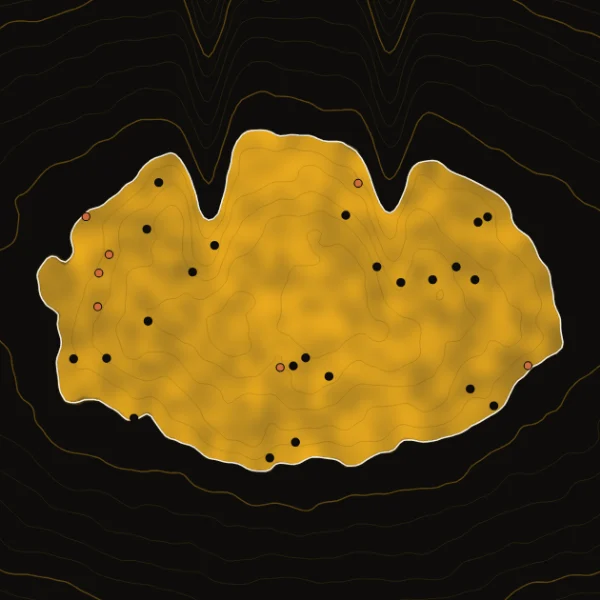 Model 002 · After Elinor Ostrom
Tending the Commons
Thirty fishers share one lake. Eight principles decide whether it lasts.
Switch Elinor Ostrom's eight design principles off one at a time and see which ones the fishery can't live without.
30 fishers · 8 principles · Governing the Commons, 1990
Open the lake
-
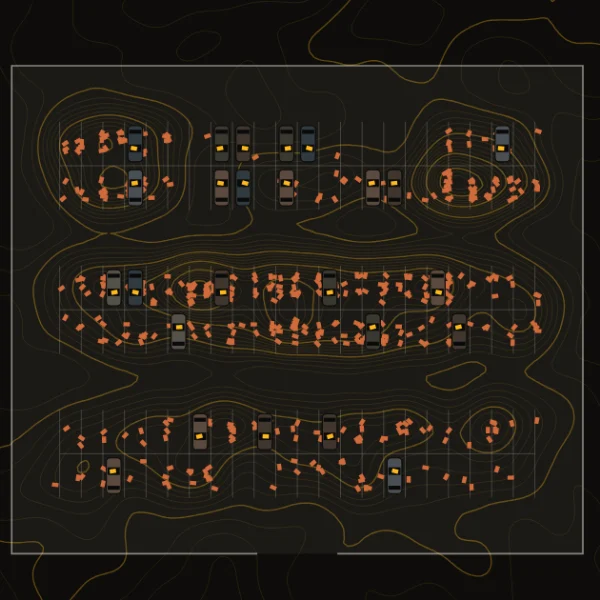 Model 003 · From Russell's research
Litter Begets Litter
Every flyer on the ground tells the next driver what is normal here.
A grocery-store parking lot from Russell's littering study. Choose the neighborhood and how much a worker picks up, and watch each dropped flyer change the odds of the next.
223 drivers in the study · Applied Geography, 2015
Open the lot
-
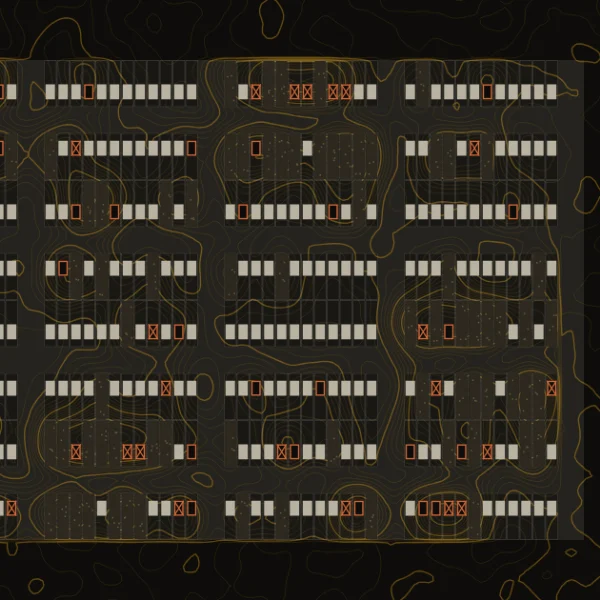 Model 004 · From Russell's research
Shrinking City
Demolition drains the tub. It doesn't turn off the tap.
Sixteen blocks that keep losing people, from Russell's research on Buffalo's demolitions. Tear down vacant houses, help owners stay, fix and sell, or mow the lots, and see what each does to the vacancy rate and the households.
384 lots · 16 face blocks · Urban Science, 2018
Open the blocks
-
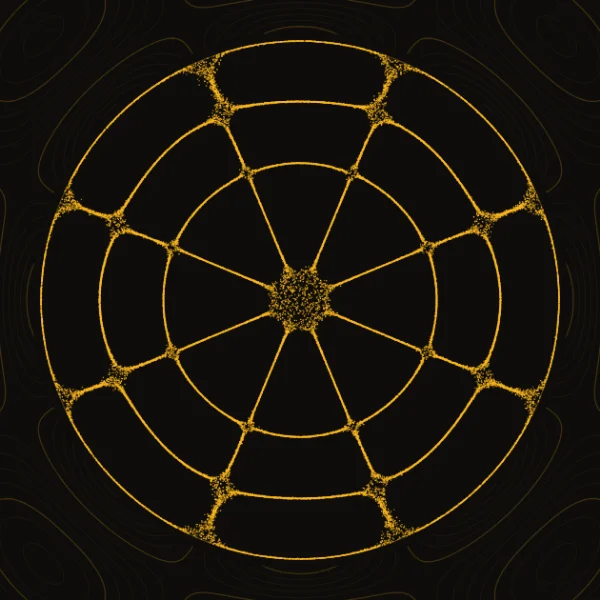 Model 005 · Math art
Sound Plates
Play a tone, and the sand draws it.
Chladni's sand figures on a plate tuned to A = 432, from Russell's NetLogo model. Play any tone, or one of seven chakra tones, and watch the sand find the lines that stay still.
40,000 grains · A = 432 · Chladni, 1787
Play a tone
The math art, in print
The Sound Plates' seven chakra figures hang beside seven Contour Plates, topographic maps of imagined ground drawn from the same code as the contours on this site.